


 Warehousing & Storage Solutions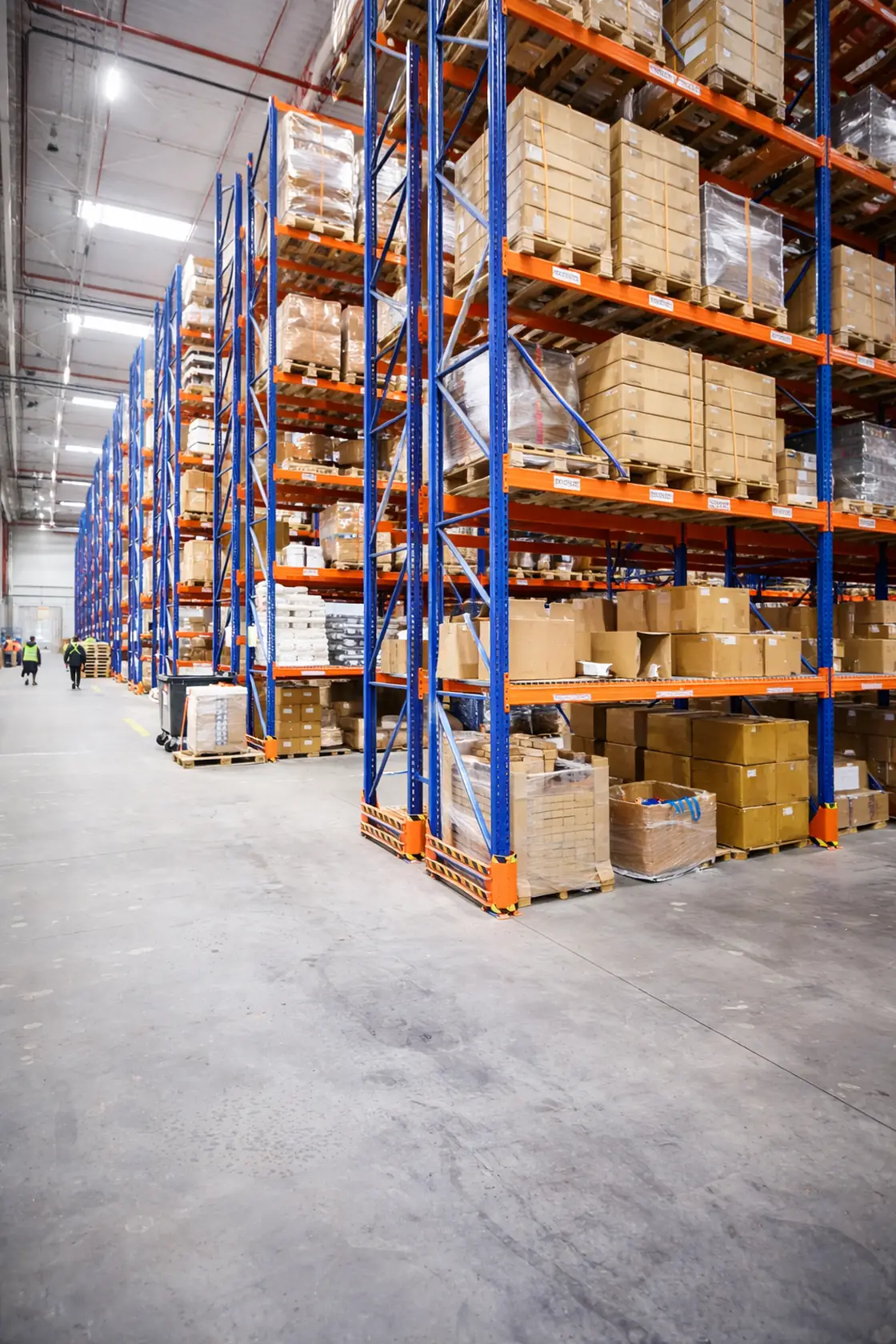
What Are Inventory Storage Solutions?
Inventory storage refers to the organized storage of commercial goods within a warehouse or distribution facility.
Products may be stored on pallets, racks, shelving, floor locations, or designated picking areas depending on the size, quantity, and handling requirements of the inventory.
Warehouse storage can be used for short-term overflow inventory, recurring product stock, imported goods awaiting distribution, seasonal inventory, or merchandise that will later be processed through pick and pack fulfillment.
The goal is to keep inventory organized, accessible, and ready for movement when the business requires it.
What Types of Inventory Can Businesses Store?
Commercial warehouses can support a variety of inventory depending on their facility, equipment, and operating capabilities. Common examples include:
- Palletized commercial goods
- Boxed merchandise
- Retail inventory
- E-commerce products
- Manufactured goods
- Imported inventory
- Replacement parts
- Packaged consumer products
- Seasonal inventory
- Business supplies
- Distribution stock
- Products awaiting order fulfillment
The suitability of a warehouse depends on the size, weight, quantity, handling requirements, and any special storage needs associated with the goods. Businesses should confirm storage requirements with the warehouse provider before inventory arrives.
Why Businesses Use Third-Party Inventory Storage
Operating a private warehouse requires space, equipment, staffing, inventory procedures, and ongoing facility costs. Third-party inventory storage allows businesses to use existing warehouse infrastructure without having to build or maintain their own facility.
This can be especially useful when a company is growing, entering a new market, carrying seasonal inventory, or importing goods into Canada without operating a local warehouse.
Businesses can also combine storage with other logistics services, allowing inventory to move from receiving to storage, fulfillment, freight, or distribution without changing facilities.
How Commercial Inventory Storage Works
Inventory is scheduled for delivery
Before goods arrive, the warehouse is provided with information about the incoming shipment. This may include:
- Product descriptions
- Number of pallets or cartons
- Expected arrival date
- Carrier information
- Special handling instructions
- Storage requirements
Providing accurate receiving information helps the warehouse prepare space and identify how the goods should be handled when they arrive.
Goods are received at the warehouse
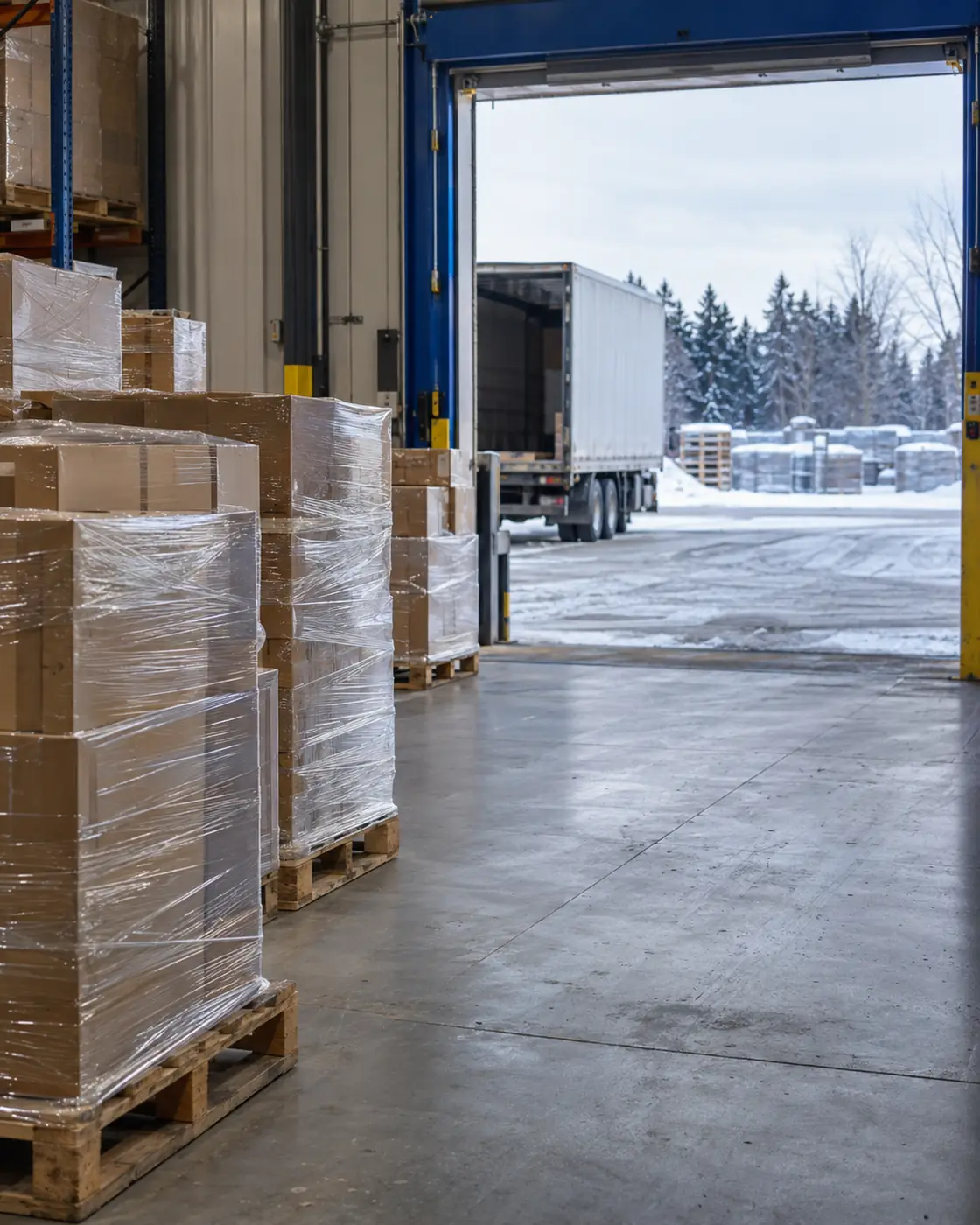
When the shipment arrives, warehouse staff receive the goods and confirm the inventory delivered. Depending on the arrangement, receiving may include checking pallet counts, carton quantities, product identification, or visible shipment condition.
Any significant discrepancies or visible damage can be documented before the goods are placed into storage.
Inventory is assigned to storage locations
After receiving, inventory is moved to an appropriate warehouse location. Goods may be stored on:
- Pallet racking
- Floor locations
- Shelving
- Dedicated storage areas
- Picking locations
- Reserve inventory locations
The storage method depends on the physical characteristics of the products and how frequently the inventory needs to be accessed.
Inventory is maintained and tracked
Once the goods are stored, inventory records are maintained so the business can understand what stock remains at the warehouse. Accurate inventory tracking becomes increasingly important when goods are frequently received, moved, picked, or shipped.
For companies using pick and pack fulfillment services, warehouse organization also helps staff locate and process individual customer orders efficiently.
Inventory is released when needed
Stored goods remain at the warehouse until the business requests movement. Inventory may be:
- Shipped as full pallets
- Sent to a retailer or distributor
- Transferred to another facility
- Picked for individual orders
- Prepared for freight transportation
- Distributed to customers
- Cross-docked into another outbound shipment
The warehouse then prepares the requested inventory for pickup or coordinates the next stage of transportation.
Shipping or distribution is coordinated
Once inventory is ready to leave storage, the warehouse prepares it for outbound transportation. This may involve pallet preparation, labelling, order assembly, staging, or coordination with a carrier.
Businesses requiring transportation support can also use freight forwarding services to coordinate the movement of inventory to its next destination.
What Businesses Should Look for in an Inventory Storage Provider
The right warehousing provider depends on more than available square footage. Businesses should consider factors such as:
- Warehouse location
- Receiving capabilities
- Available storage capacity
- Pallet and shelving options
- Inventory organization
- Inventory reporting
- Order accuracy
- Pick and pack capabilities
- Shipping coordination
- Freight access
- Communication
- Security
- Flexibility as inventory volumes change
- Ability to handle imported goods
Businesses that require both storage and ongoing order processing should also confirm whether the warehouse can support fulfillment rather than simple long-term storage.
Inventory Storage for Imported Goods
Inventory storage can be particularly valuable for companies importing commercial goods into Canada. A business may import goods in larger commercial quantities, clear the shipment through CBSA, and then move the inventory directly into a Canadian warehouse for storage and domestic distribution. A typical process may look like:
- International supplier
- Customs clearance
- Canadian warehouse
- Inventory storage
- Fulfillment or distribution
Garden City provides both commercial customs brokerage services and warehousing support, which can help businesses coordinate imported inventory after customs release.
Companies importing commercial goods should also ensure they are properly established as Canadian commercial importers. See Do You Need a Business Number to Import Into Canada? for more information about BN, RM, and CARM requirements.
Short-Term vs. Long-Term Inventory Storage
Not every business needs warehouse space for the same length of time. Short-term storage may be useful for:
- Temporary inventory overflow
- Seasonal stock
- Goods awaiting onward transportation
- Imported inventory awaiting distribution
- Short-term project requirements
Longer-term storage may be more appropriate for businesses maintaining recurring stock in Ontario or using a warehouse as part of an ongoing fulfillment and distribution strategy.
The right arrangement depends on inventory turnover, storage volume, shipment frequency, and how quickly products need to move through the facility.
Why Warehouse Location Matters
Warehouse location can affect transportation costs, delivery times, receiving efficiency, and access to major markets.
For businesses involved in Canada–United States trade, warehousing near the border can be especially useful when imported goods need to move quickly from customs clearance into storage or onward distribution.
Niagara Falls provides access to major border crossings and transportation routes serving Southern Ontario and the northeastern United States.
Businesses looking specifically for local warehouse capacity can review Warehousing Services in Niagara Falls.
How Garden City Supports Commercial Inventory Storage
Garden City Customs Services Inc. provides commercial warehousing services in Niagara Falls, Ontario.
Our warehouse supports businesses requiring inventory receiving, pallet storage, inventory organization, pick and pack operations, and outbound shipment coordination.
For companies importing goods into Canada, our customs brokerage, freight forwarding, and warehousing capabilities can also help coordinate multiple stages of the cross-border supply chain.
This guide is general information, not legal advice. Requirements depend on your specific goods and circumstances, so please confirm details with a licensed customs broker before you ship.