


 Customs Brokerage & Clearance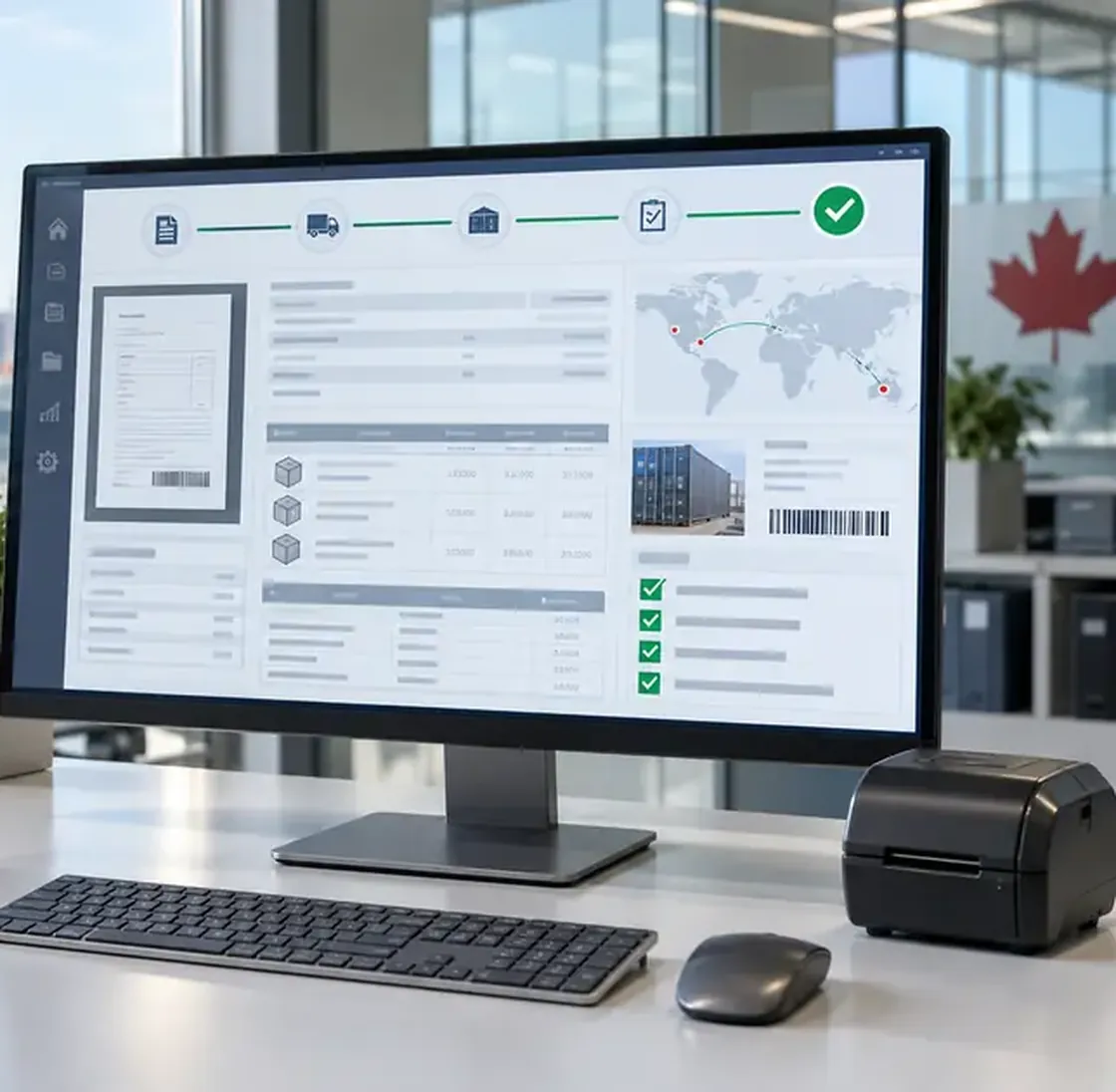
What Is a Customs Broker?
A customs broker is a private company licensed by the Canada Border Services Agency to perform certain customs-related activities on behalf of importers.
Customs brokers do not work for CBSA. Instead, they act as an intermediary between the importer and Canadian customs, helping prepare and transmit the information required to clear commercial goods entering Canada.
A broker may become involved before the shipment reaches the border, reviewing documents and identifying potential customs requirements so the information needed for release can be prepared in advance.
The importer, however, remains responsible for the accuracy and completeness of its customs transactions, including classification, origin, valuation, applicable duties and taxes, and required corrections. For more detail, see Importer of Record Responsibilities in Canada.
What Does a Customs Broker Do?
The exact services provided depend on the importer and shipment, but a customs broker may assist with:
- Reviewing commercial invoices and shipment documentation
- Preparing customs release information
- Determining Harmonized System (HS) tariff classifications
- Reviewing country of origin and tariff treatment
- Reviewing customs valuation
- Calculating applicable customs duties and GST
- Preparing and transmitting customs declarations
- Communicating with CBSA regarding shipment release
- Preparing Commercial Accounting Declarations through CARM
- Supporting corrections and post-release customs matters
- Maintaining structured customs procedures for recurring imports
For businesses importing regularly, a broker can also help maintain consistency in how products, suppliers, values, and customs information are handled from shipment to shipment.
How the Customs Brokerage Process Works in Canada
The importer establishes its Canadian import account
Before regularly importing commercial goods into Canada, a business must have the appropriate importer registration and account information. Commercial importers operate within CBSA's CARM environment and require a Business Number and applicable RM program account.
Businesses seeking to benefit from Release Prior to Payment may also need to meet CARM registration and financial security requirements. See What Is CARM in Canada? and CARM for Commercial Importers.
The importer provides shipment documents
The customs broker needs accurate shipment information before customs documentation can be prepared. The commercial invoice is one of the primary documents used during the clearance process and should clearly identify the goods, seller, buyer, quantity, value, currency, and other required transaction information. Depending on the shipment, the broker may also review:
- Packing lists
- Bills of lading
- Purchase orders
- Certificates of origin
- Import permits or licences
- Product specifications
- Transportation information
- Other supporting documentation
Complete documentation allows the broker to identify potential issues before the shipment reaches CBSA. See Freight Shipping Documents in Canada.
Classification, valuation and origin are reviewed
Before duties and taxes can be properly determined, the imported goods must be reviewed for tariff classification, value for duty, and origin.
Every imported product must be classified under the Harmonized System. The classification can affect the applicable duty rate and may also identify regulatory requirements affecting the goods. Learn more in Tariff Classification in Canada.
The customs value of the goods must also be determined according to Canadian valuation requirements, while origin and tariff treatment must be reviewed to determine whether regular or preferential tariff rates apply.
Duties and taxes are determined
Once the customs information has been reviewed, applicable duties, GST, and other import charges can be determined. The amount payable can depend on:
- HS tariff classification
- Value for duty
- Country of origin
- Applicable tariff treatment
- Free trade agreement eligibility
- Type of goods
- GST
- Excise duties or taxes where applicable
- Surtaxes or special import measures where applicable
Not every commercial import is subject to customs duty. Some goods may qualify for duty-free treatment while remaining subject to GST or other applicable charges. See Understanding Duties, Taxes and GST.
The broker submits the shipment to CBSA
Once the required information has been prepared, the customs broker electronically transmits the applicable release information to CBSA. Depending on the circumstances, release may be requested using interim accounting information or an applicable Commercial Accounting Declaration.
CBSA uses the information submitted for the shipment to determine whether the goods can be released or whether further review is required. The customs broker monitors the transaction and can respond when CBSA requires additional information or documentation.
CBSA makes the release decision
CBSA ultimately determines whether imported goods may be released into Canada. A shipment may be released without further action, or CBSA may:
- Request supporting documentation
- Request clarification
- Verify permits or licences
- Refer the transaction for further review
- Examine the goods
- Hold the shipment until an issue has been resolved
A customs broker can assist with communication and documentation during this process, but the release decision remains with CBSA. See How the CBSA Release Process Works.
Commercial accounting is completed through CARM
Release is not necessarily the final stage of a commercial import. The shipment must also be properly accounted for through the CBSA Assessment and Revenue Management system, commonly known as CARM.
Commercial Accounting Declarations are used to account for imported goods and determine the applicable duties and taxes. Importers must also maintain the required records supporting their customs transactions and correct customs information when required. More in our CARM & Import Compliance resources.
What Happens After the Shipment Is Released?
Customs clearance does not eliminate the importer's ongoing compliance responsibilities.
Importers must maintain records supporting the classification, origin, valuation, accounting, and payment associated with their commercial imports. They may also be required to correct information if an error is discovered after release.
CBSA can conduct post-release reviews and verification activities, meaning accurate records remain important after the shipment has crossed the border.
Businesses with recurring imports should therefore treat customs brokerage as part of their ongoing import compliance process rather than simply a transaction that ends when the shipment is released.
Who Is Responsible for Customs Compliance?
Using a customs broker does not transfer the importer's customs responsibilities to the broker. The importer remains ultimately responsible for the accuracy and completeness of its import transactions, including the information provided to CBSA and the payment of applicable duties and taxes. This can include responsibility for:
- Tariff classification
- Customs valuation
- Country of origin
- Tariff treatment
- Import permits and regulatory requirements
- Duties and taxes
- Customs records
- Post-release corrections
A customs broker helps businesses manage these processes, but the importer should provide accurate information and maintain appropriate records supporting its imports.
What Information Does a Customs Broker Need From an Importer?
Providing complete and accurate information helps a customs broker prepare the shipment for clearance and reduces avoidable delays. Depending on the goods and transaction, an importer may need to provide:
- Commercial invoice
- Detailed product descriptions
- Quantity and value of the goods
- Currency of sale
- Country of origin
- Supplier or vendor information
- Importer Business Number and RM account
- Transportation or shipment information
- Certificates of origin where required
- Import permits, licences, or other regulatory documents
- Product specifications when needed for tariff classification
- Information affecting customs valuation or tariff treatment
Importers should avoid relying on vague product descriptions such as "parts," "equipment," or "samples" when more specific information is available.
The quality of the information supplied to the broker directly affects the quality of the customs declaration prepared from it.
How Garden City Supports Commercial Importers
Garden City Customs Services Inc. provides customs brokerage and clearance services for commercial importers across Canada.
Our team supports businesses with customs documentation, tariff classification, release processing, duties and taxes, CARM accounting, and ongoing customs requirements.
Whether your company imports occasionally or manages recurring cross-border shipments, our goal is to provide accurate, responsive customs clearance with direct broker support.
This guide is general information, not legal advice. Requirements depend on your specific goods and circumstances, so please confirm details with a licensed customs broker before you ship.