


 Customs Brokerage & Clearance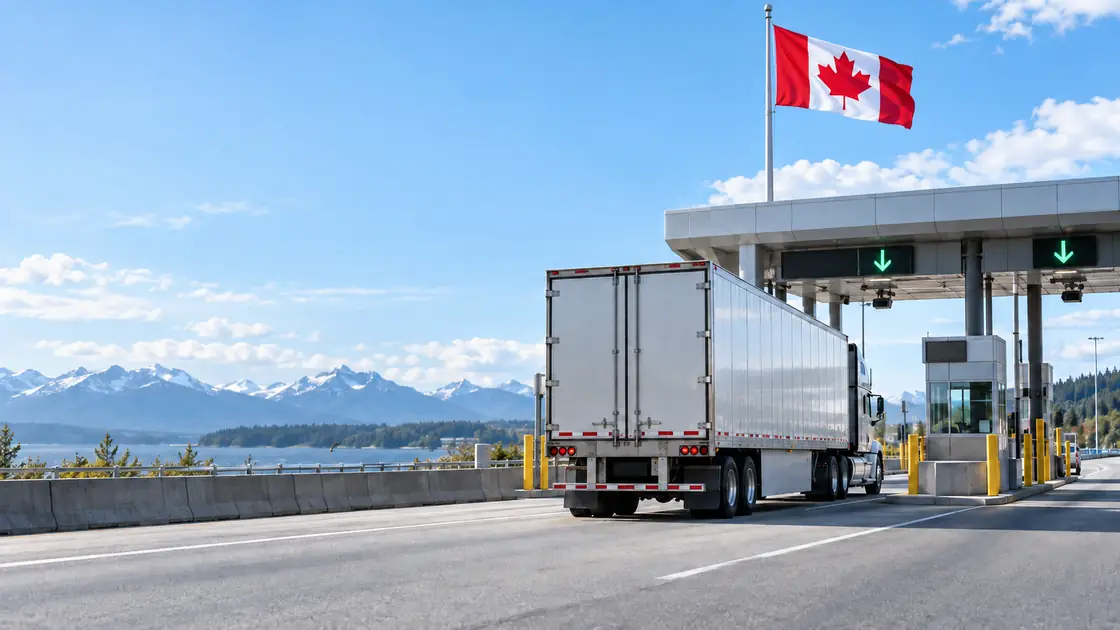
What a PARS Number Is
The Pre-Arrival Review System (PARS) lets an importer or customs broker send CBSA the release information for commercial goods before or after they arrive, so a border services officer can review it and decide to release or refer the shipment. On the highway, it is the most common way trucks clear into Canada.
What drivers call the PARS number is the shipment's cargo control number (CCN). CBSA builds it from two parts:
- The carrier code: four characters CBSA assigns to the carrier
- A shipment number: chosen by the carrier and unique to that load
Together they identify both the carrier and the shipment to CBSA, from the moment the cargo is reported to the moment the release is presented. A CCN must be at least 5 characters, contain no spaces and not exceed 25 characters.
The bar-coded PARS label
Carriers print PARS numbers on self-adhesive bar-coded labels, one label per PARS shipment. CBSA keeps a list of printers whose bar codes it has approved, and carriers using another printer must have their bar codes tested. Highway carriers have 30 days after receiving a carrier code to get their labels.
A shipment number cannot be reused within three years, so each label is used for one load only.
Who Does What in a PARS Shipment
A PARS clearance only works when four parties each do their part:
- The carrier and driver: put the PARS label on the paperwork, send the PARS number and documents to the importer's customs broker, and transmit the eManifest for the load and the truck
- The customs broker: submits the PARS release request to CBSA using the exact PARS number, and follows up on any reject or referral
- The importer: has a Business Number, RM import account and CARM registration, and has authorized the broker to act for it
- CBSA: reviews the release request, matches it to the reported cargo when the truck arrives, then releases or refers the goods
PARS is a form of interim accounting: the goods are released first and accounted for afterwards. Commercial importers using PARS generally need active Release Prior to Payment privileges.
How PARS Clearance Works, Step by Step
The carrier assigns the PARS number
A PARS label goes on the shipment's paperwork when the load is picked up. The bar code and the printed number must be the same number the broker will use.
The driver sends the paperwork to the broker
Before reaching the border, the driver or dispatcher sends the PARS number, the commercial invoice and any other shipping documents to the importer's customs broker. Sending it early gives the broker time to fix missing details.
The broker submits the PARS release request
The broker transmits the release information to CBSA, linked to the PARS number. CBSA accepts PARS submissions up to 45 calendar days before the goods arrive.
The carrier transmits the eManifest
The carrier's electronic cargo and conveyance data must be received and validated by CBSA no later than one hour before the truck arrives at the first port of arrival. CBSA only sends "Declaration accepted" once both the release request and the carrier's cargo data are on file.
The truck arrives at the border
The driver presents at the primary inspection booth. A shipment is eligible for release only when all of its cargo is in arrived status.
CBSA releases or refers the goods
The officer releases the load or refers it for examination or more information. Referred trucks follow the officer's directions, and the broker works with CBSA to resolve the referral.
Final accounting after release
After release, the importer's final accounting is completed in CARM through the Commercial Accounting Declaration. See How CBSA Release Processing Works.
What to Send Your Customs Broker
Most PARS delays start with paperwork that reaches the broker late or incomplete. For each load, the broker generally needs:
- The PARS number, exactly as printed on the label
- The commercial invoice
- The bill of lading or other shipping document
- The importer's name, as registered for its importer account
- The port of entry and expected arrival time
- Any permits or certificates the goods need
If anything changes on the way, such as the port, the pieces or the weight, tell the broker before arrival. For a full list of documents, see Freight Shipping Documents Required for Importing Goods.
What Each CBSA Release Status Means
CBSA reports the status of a release request through its Release Notification System (RNS). The messages carriers and brokers see most often:
- Declaration accepted, awaiting arrival of goods: the release request and the cargo data are on file; CBSA is waiting for the truck to arrive. The load is not released yet
- Declaration accepted, awaiting customs processing: the goods have arrived and an officer has not yet made a decision
- Goods released: CBSA has released the goods and the load can proceed
- Goods required for examination – referred: CBSA wants to examine the goods or see more information before deciding
- Goods may move, detain to destination (CFIA): the goods can travel but must be held at destination for the Canadian Food Inspection Agency
- Authorized to deliver – CSA shipment: the release message for shipments moving under the Customs Self Assessment program
- CCN not on file: CBSA has no release request under that PARS number. Either it hasn't been submitted yet or the number doesn't match the label
A PARS number on its own does not mean a load is cleared. Only a release decision does.
PARS vs. PAPS
PARS is Canada's system, used for goods entering Canada and run by the Canada Border Services Agency. PAPS, the Pre-Arrival Processing System, is the U.S. Customs and Border Protection equivalent for trucks entering the United States.
A carrier running both directions needs a PARS number for northbound loads and a PAPS number for southbound loads, each sent to the customs broker on that side of the border. A PAPS number can't be used to clear goods into Canada.
Check a PARS With Garden City's Tracker
Garden City's Check My PARS tracker is built for truck drivers and dispatchers hauling loads for importers that use Garden City as their customs broker. It shows the customs status of the shipment without a phone call. Depending on the shipment, it can show:
- The CBSA release status and the release date and time
- The CBSA office of release
- The cargo control number, house bill and entry number
- Origin, destination and arrival ports
- Packages and weight
- The warehouse, when the goods go to one
- A tracking history as statuses update
If the tracker shows a referral or no record for your load, call us at 888-481-2048 with the PARS number ready.
Common PARS Problems and How to Avoid Them
- The number doesn't match: a typo, a missing character or an added space means CBSA can't link the release to the load. Send the number exactly as printed
- A label is reused: each PARS number belongs to one shipment
- The eManifest is late or missing: cargo data must be validated at least one hour before arrival, or the release can't be matched
- Paperwork reaches the broker at the border: the broker can't submit until it has the invoice and PARS number
- The importer isn't set up: without a Business Number, RM account, CARM registration and broker delegation, the broker can't clear the goods. See Do You Need a Business Number to Import Into Canada?
- The goods need a permit: food, plants, animals, drugs, steel and other regulated goods may need permits or other agency approval. See Import Permits and Regulated Goods
For other causes of delay, see Common Reasons Shipments Are Held at Canada Customs.
How Garden City Helps
Garden City Customs Services Inc. clears PARS shipments for commercial importers at ports of entry across Canada, with offices in Niagara Falls, at the Peace Bridge in Fort Erie and at the Queenston-Lewiston Bridge. If you are an importer looking for a broker, see our customs brokerage services.
Official Sources
This guide is general information, not legal advice. Requirements depend on your specific goods and circumstances, so please confirm details with a licensed customs broker before you ship.